Performance Design

Refining your business’s digital marketing materials by utilizing industry best practices from consumer psychology and conversion optimization is a cost-effective way to help drive higher revenues and other business-critical KPIs.
We work with CCO’s and CMO’s to bring the benefits of performance design to their teams and organizations. With performance design, you can drive measurable improvements and gain actionable insights into your customers.
Increase the business value of your creative with cross-disciplinary best practices
Performance design provides a cost-effective path to improving your ROI on creative from website designs to digital ads. Combined with iterative testing, performance design can help drive tangible results for your business.
While the power of design is undisputed in today’s digital landscape, often best practices from consumer psychology and industry wide conversion research get lost in the shuffle. We have seen basic principles for performance design help improve creative performance on everything from landing pages to Google Ads.
Performance design, in this context, is everything from website design to ad creative that drives a well-defined, measurable, and business-critical KPI. To do this, performance design hews closely to brand guidelines while employing best practices from consumer psychology and conversion optimization to drive measurable results.
The result of successful performance design is creative that balances a range of heuristics, each of which may place additional limits on how freely an asset can be “designed,” in order to ensure it accomplishes its purpose — driving a given KPI. The quantitative feedback provided by driving a specific KPI helps drive iterative improvement.
Since performance design requires a clear KPI for implementation it also requires explicit commitment by all stakeholders to down-funnel performance and honest evaluation of creative work. If a design is not accountable to driving a KPI it is not performance design.
Of course design does not exist in a bubble. If the implementation of creative occurs on the wrong channels, is poorly targeted, or the value proposition itself is unclear or not compelling, we can hardly call this a design issue. Given this, creative needs to be accountable for and able to hold others accountable for best-in-class performance.
What is Performance Design?
Performance Design allows you to contract our team in two capacities:
- Audit / Review: We welcome opportunities to support existing in-house and 3rd party creative teams. In this capacity we are available to review any “work in progress” creative and in-market creative to provide design recommendations to help improve performance.
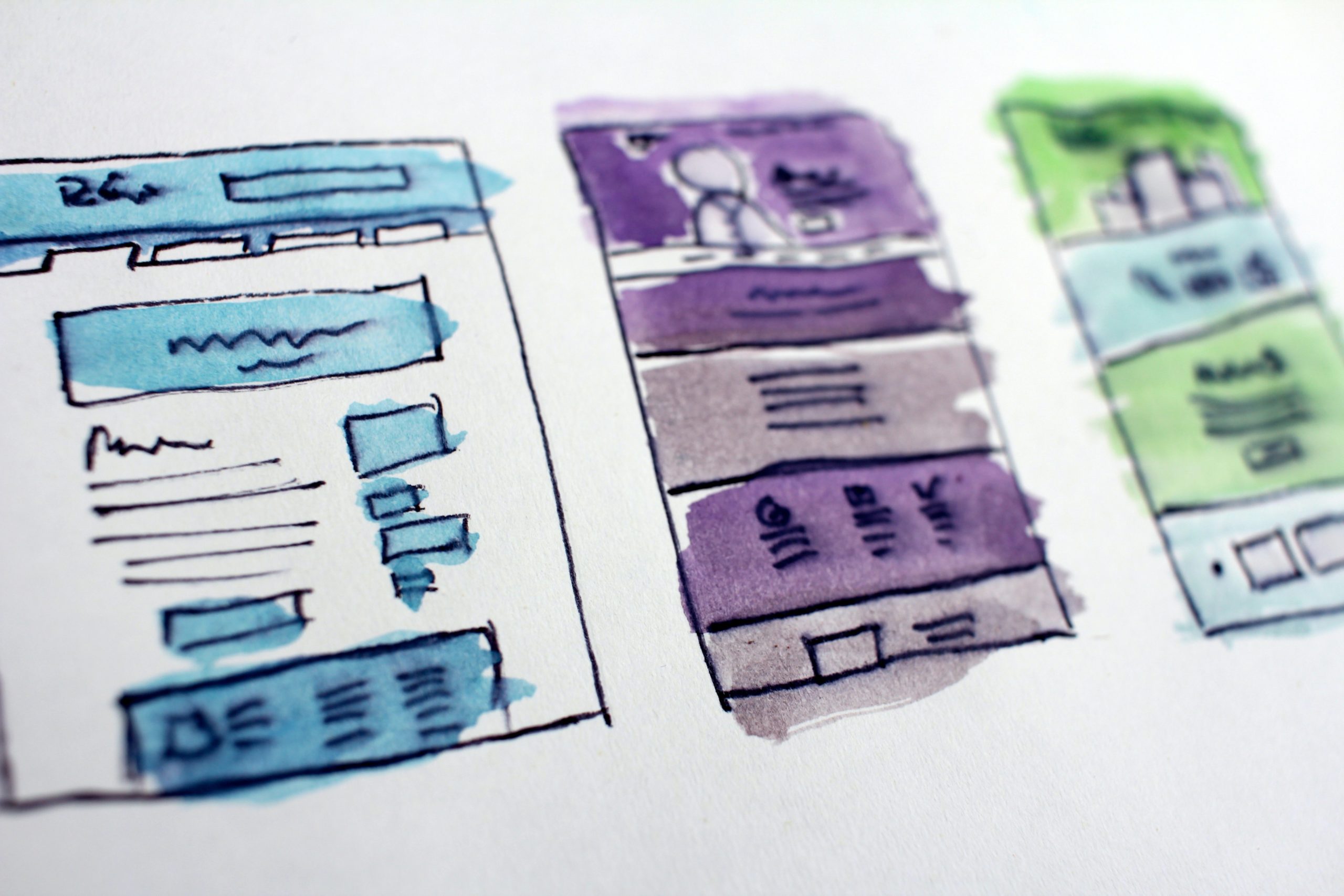
- Develop: If you’re looking to have designs developed or adapted but don’t have available resources, our staff of designers and copywriters can develop brand-aligned assets ranging from wireframes to display ads.
Typically our clients hire us to review complex work like website redesigns or to audit key conversion funnels in their customer journey for possible improvements.
For clients who contract us for PPC management, we will also often augment their teams with creative development for ads.
What are the tradeoffs?
We work to be transparent about tradeoffs and tensions that must be navigated in any of our work. Performance design typically encounters two major types of tradeoffs that need to be navigated to develop and launch more effective creative.
For experienced digital marketers, the following tensions will likely not come as a surprise. Rather, they often serve as forcing functions for crucial conversations that need to be had within a team or organization.
Challenge 1: When Form is Greater than Function
Imagine a brand campaign driving to a microsite that has a beautiful landing experience, clever concept, and a button that reads “enter site.” In one real-world engagement this landing page had a roughly 50% bounce rate, meaning a lot of top of funnel promotion and press coverage was wasted. Ouch. Removing the forced landing experience and delivering desirable content quickly to users was an immediate improvement.

Imagine a landing page built for lead gen. It’s primary KPI is a form fill. Money is being spent on PPC to help qualify and drive traffic to this landing page and feedback loops exist to inform stakeholders on down-funnel lead quality. Everyone likes the way the page looks, it feels on-brand and the messaging reads clearly. The above-the-fold image is a beautifully designed hero image featuring 2d line art with some fun animations that feels on-brand, contemporary, and signals design sophistication. It does not, sadly, feature smiling people–let alone actual human beings smiling. Whatever the other merits of the page, the creative itself, and the coordination of stakeholders, this is a well-established driver of conversion. It represents an easy win to either implement or test and shouldn’t be neglected.
The point? Without measurable results to serve as a guardrail, creative teams may generate beautiful, award winning, on-brand assets that aren’t actually performant, or could be more performant with some relatively small changes.
While we understand not all brand touchpoints and conversions are the same and that sometimes we may need to choose brand over conversion (especially in awareness and demand generation) — this tension is best navigated as an explicit conversation with clear expectations for tradeoffs and the impact of results on the business.
Challenge 2: When Institutional Drivers are Greater than Function
If you want people to complete a form, extensive industry testing has established the rule of thumb that “fewer fields are better”. However, often institutional parties will require as many fields as they can in the hopes of gathering more information prior to a customer’s first contact. By erring on the side of what internal parties want, the institution itself (and the parties servicing customers) will likely lose out on a nontrivial % of potential form fills and by extension — customers.
Testing by a number of industry giants, including Wal-Mart, suggests speed can moderate conversion by as much as -.1s == +1% conversion rate. Additionally, page load speed is a known quality signal for search engines. This makes speed a critical factor for UX, search ranking, and ultimately–conversion. And yet, sites abound that are bloated with widget upon widget, multiple instances of analytics and marketing scripts, video, animations, etc. The resulting impact on speed has a real business cost associated with it.
Tradeoff functions are a necessary part of every project. As with the form / function spectrum, projects must also navigate the institution’s own biases and internal forces as well as optimizing for the explicit KPI of a given initiative. There is no single solution, and as before, the best solution is consciously negotiated tensions (have hard conversation), structures of accountability (measure accurately), and flexibility (change as you learn).
The Customer Always Comes First
In 2021, the sentiment that “the customer always comes first” may feel oddly old fashioned. But at some point in the customer journey actions become real–even if they occur digitally and only between a customer and your website. At this point the user is making concrete choices and revenues are impacted. At any high-value pivot like this in the customer journey, things should be measured and optimized.
The most critical thing governing this interaction is not necessarily a design team’s creativity or a tech team’s innovation. The most important things are:
- Is it clear what you want the customer to do?
- Is it easy for them to do it?
- Can they do it quickly?
- Does the content they interact with build trust and show the benefit for the customer?
- Is the interaction populated with images of smiling human beings?
- Do key interaction points have a high-contrast element to make it easy to see as “the most important thing”?
- And so on…
These are the things your customers want. These are the things that help them decide to take action and follow through. This is the heart of performance design.
Is Performance Design Right for You?
Performance design falls squarely under performance marketing as a discipline. It is best utilized for marketing activity that is centered around demand servicing vs. demand generation (i.e. conversions vs. awareness). If you have a funnel for conversions, whether for email sign ups or high-ticket purchases, you’ll likely want to consider performance design as a potential tool for improving results. Let’s talk.
You should consider performance design if:
- You have a measurable KPI that is being driven by visual elements (website, landing page, PPC ads)
- Your conversion KPIs can be tied directly to a key business metric (either the KPI is revenue or a meaningful proxy for revenue) so that reporting on performance can be tied to driving business value.
- You have an analytics ecosystem set up to track conversions or are interested in developing one.
- You are currently set up to do A/B testing or are interested in building this capability.
Although JB has a presence in two countries, we’re a close-knit group and most of us have worked with one another for several years and meet up in person regularly. If you’re looking for a cohesive team who can get things done, you’re in the right place.